
The Silent Epidemic and the Five Pillars of Restoration: A Deep Dive into Office Syndrome Therapies
In the contemporary landscape of labor, the battlefield has shifted from the physical demands of the factory floor to the sedentary confinement of the open-plan office. While the industrial revolution broke the body through exertion, the digital revolution is breaking the body through stillness.
2/10/20269 min read


In the contemporary landscape of labor, the battlefield has shifted from the physical demands of the factory floor to the sedentary confinement of the open-plan office. While the industrial revolution broke the body through exertion, the digital revolution is breaking the body through stillness. We are currently witnessing a pervasive health crisis known as Office Syndrome, a complex cluster of neuromuscular disorders caused by the prolonged, static postures required by modern desk work. The human body, evolved for movement, hunting, and gathering, is now forced to endure eight to ten hours of rigidity, often locked in a seated position that defies our biomechanical design. The consequences are widespread and debilitating, manifesting as chronic neck pain, tension headaches, lower back stiffness, and a pervasive sense of fatigue that sleep cannot cure. This "sitting disease" has necessitated the rise of specialized therapeutic interventions, a sophisticated arsenal of treatments designed to counteract the specific ravages of the desk-bound life. Among the myriad of options available to the suffering workforce, five therapies have risen to prominence due to their efficacy and popularity. These five pillars—Deep Tissue Massage, Traditional Thai Massage, Physiotherapy and Shockwave, Acupuncture and Dry Needling, and Cupping Therapy—represent the gold standard in reclaiming physical vitality. To understand why they are so effective, one must journey deep into the anatomy of the condition and the specific physiological mechanisms each therapy leverages to restore balance.
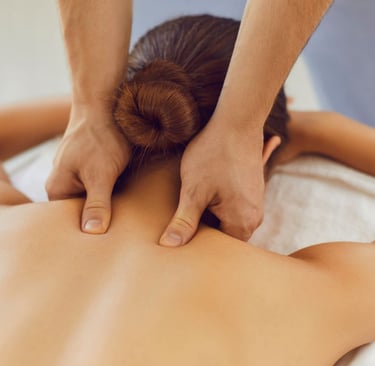
The first and perhaps most immediately gratifying of these interventions is Deep Tissue and Trigger Point Therapy. When a person sits at a computer for hours, their shoulders instinctively rise toward their ears in a subconscious guarding reflex, and their head juts forward to focus on the screen. This posture places an immense, sustained load on the upper trapezius and levator scapulae muscles. Over time, the muscle fibers, starved of oxygen due to constant contraction, begin to adhere to one another. The fascia, the connective tissue that wraps every muscle, becomes dehydrated and sticky, creating what we commonly refer to as "knots." These are not literal knots, but palpable nodules of hyper-contracted muscle fiber known as trigger points. Deep Tissue Massage addresses this by ignoring the superficial relaxation techniques of a standard Swedish massage and diving straight into the architectural problems of the musculature. The therapist uses slow, deliberate strokes with knuckles, elbows, and forearms to physically strip apart the adhered fibers. The pace is critical here; moving too fast causes the muscle to guard against the intrusion, but moving slowly allows the nervous system to accept the pressure and release the tension.


Trigger Point Therapy takes this a step further by hunting for the specific epicenter of the pain. One of the hallmarks of Office Syndrome is referred pain; a headache behind the eye may actually be caused by a trigger point in the neck, or numbness in the fingers might stem from tightness in the pectoral muscles compressing the nerves. A skilled therapist understands these referral patterns. They apply sustained, ischemic pressure to the trigger point, temporarily cutting off blood flow to that tiny spot. When the pressure is released, a rush of fresh, oxygenated blood floods the tissue, flushing out the metabolic waste products like lactic acid and calcium that were keeping the muscle locked in contraction. The sensation is often described as "good pain," a distinct feeling of release that signals the body is finally letting go of the stress it has been holding. This therapy is foundational because it manually resets the resting length of the muscles, allowing the shoulders to drop back down to their natural position and the neck to regain its full range of motion. It is a mechanical solution to a mechanical problem, physically remodeling the tissue that has been hardened by hours of stillness.
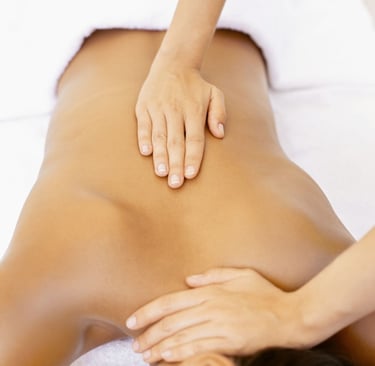
While Deep Tissue focuses on the specific knots, the second most popular therapy, Traditional Thai Massage, takes a systemic and holistic approach that is often described as "lazy man’s yoga." This ancient modality is particularly suited for Office Syndrome because it addresses the kinetic chain of the entire body. Sitting does not just affect the back; it severely tightens the hip flexors and hamstrings, which in turn pull on the pelvis and cause lower back pain. A Deep Tissue massage might miss this connection if it focuses only on the upper body, but Thai Massage treats the body as an interconnected web of energy lines, known as "Sen." The therapist guides the recipient through a series of assisted yoga postures, stretching the body into positions that would be difficult to achieve alone. For the desk worker whose body is perpetually folded into a chair, the extension provided by Thai Massage is medicinal. The therapist uses their hands, knees, legs, and feet to move the client into deep backbends and spinal twists.
These movements are crucial for countering the "c-shape" slump of the spine. When a therapist pulls the arms back and presses their knee into the spine, they are essentially reversing the posture of the office worker. The chest, chronically collapsed forward while typing, is forced open. The pectoral muscles are stretched, allowing the breath to deepen. Office Syndrome often results in shallow, apical breathing because the tight chest muscles restrict the rib cage. Thai Massage liberates the respiratory mechanism. Furthermore, the rhythmic compression along the Sen lines helps to stimulate the parasympathetic nervous system. Office work is often high-stress, keeping the body in a state of "fight or flight," which increases muscle tension. The meditative, rhythmic rocking of Thai Massage down-regulates the nervous system, signaling to the brain that it is safe to relax. This combination of deep stretching to open the hips and chest, coupled with the energetic balancing of the Sen lines, makes Thai Massage a comprehensive antidote to the stagnation of desk life. It restores fluidity and range of motion, reminding the body of its capacity for movement.

Moving from the ancient to the modern, the third pillar of treatment is the scientific approach of Physiotherapy, often augmented by advanced technologies like Shockwave Therapy. While massage relaxes the muscles, physiotherapy aims to correct the structural imbalances that caused the pain in the first place. This approach is rooted in the concept of "Upper Crossed Syndrome," a pattern where tight upper back muscles and tight chest muscles cross with weak neck flexors and weak lower shoulder stabilizers. A physiotherapist does not just treat the symptom; they treat the root cause. They analyze the ergonomics of the patient's workstation and prescribe active rehabilitation exercises to strengthen the weak rhomboids and serratus anterior muscles that are supposed to hold the shoulder blades in place. However, before strengthening can occur, the chronic inflammation and calcification in the tissues often need to be addressed, and this is where technology plays a vital role.
Shockwave Therapy has emerged as a game-changer for chronic Office Syndrome. It utilizes acoustic waves that carry high energy to painful spots and myoskeletal tissues with subacute, subchronic, and chronic conditions. The energy promotes regeneration and reparative processes of the bones, tendons, and soft tissues. For an office worker with calcified tendons in the shoulder or severe chronic tightness that manual massage cannot break down, the shockwave machine delivers rapid percussion that physically breaks up the scar tissue and stimulates neovascularization—the growth of new blood vessels. This increases blood supply to the injured area, accelerating the body’s natural healing process. Often paired with Ultrasound Therapy, which uses sound waves to generate deep heat and increase tissue extensibility, physiotherapy offers a clinical, measurable path to recovery. It appeals to those who want to understand the "why" of their pain and who are willing to engage in active exercises to prevent recurrence. It is the bridge between passive treatment and active lifestyle change, ensuring that the relief gained is sustainable long-term.
For those whose tension lies deep within the muscle layers where fingers cannot reach, or for those with nerve impingement, the fourth therapy, Acupuncture and Dry Needling, offers a profound solution. Though they use similar tools—filiform sterile needles—the philosophies differ slightly, yet both are devastatingly effective against Office Syndrome. Traditional Acupuncture is based on Traditional Chinese Medicine (TCM) and focuses on the flow of Qi (energy) through meridians. From a TCM perspective, the stiffness and pain of Office Syndrome are viewed as "stagnation." By inserting needles into specific points, the acupuncturist unblocks this stagnation, promoting the free flow of energy and blood. This often induces a deep state of relaxation and releases natural painkillers like endorphins and serotonin.

Dry Needling, on the other hand, is a more Western, anatomical approach that targets trigger points directly. When a muscle is chronically tight, it can be difficult to release with pressure alone because the muscle layers are thick. A needle can bypass the superficial layers and penetrate directly into the taut band of muscle fiber deep in the shoulder or neck. When the needle hits the trigger point, it elicits a "local twitch response"—an involuntary spinal cord reflex where the muscle fibers contract and then immediately relax. This twitch is the reset button for the muscle. It changes the chemical environment of the tissue, reducing the concentration of inflammatory neuropeptides. For the office worker with "rock hard" shoulders that seem impervious to massage, dry needling is often the breakthrough therapy. It resets the neurological tone of the muscle. Furthermore, needles can be placed near the spine to influence the nerve roots, helping to alleviate the radiating pain or numbness down the arms that often accompanies severe cases of tech-neck. The precision of the needle allows for a neurological intervention that complements the mechanical intervention of massage, addressing the software of the nervous system as well as the hardware of the muscles.
Finally, the fifth therapy, which has seen a massive resurgence in popularity due to its visibility on Olympic athletes and celebrities, is Cupping Therapy. This modality operates on a principle that is the exact inverse of massage. While massage relies on positive pressure (pushing into the tissue), cupping utilizes negative pressure (suction) to pull the tissue upward. This distinction is crucial for Office Syndrome. Over years of sitting, the layers of skin, fascia, and muscle can become matted down and compressed, restricting blood flow and lymphatic drainage. By placing glass, plastic, or silicone cups on the skin and creating a vacuum, the therapist creates a separation between these layers. This "myofascial decompression" creates space for fluid to move.
The suction draws stagnant blood, cellular debris, and toxins from deep within the muscle tissue up to the surface, where the lymphatic system can flush them away. This is what causes the characteristic circular marks—they are not bruises, but rather the visible evidence of stagnation being cleared. For the office worker, cupping is particularly effective on the broad expanse of the back and the posterior neck. The sensation is unique; it feels like a deep stretching of the skin and fascia, a relief from the constant downward compression of gravity and poor posture. Therapists often use "gliding cupping," where oil is applied and the suctioned cups are moved across the back. This mimics the rolling of the fascia, smoothing out the connective tissue much like ironing a wrinkled shirt. It brings an immense surge of blood flow to the paraspinal muscles, warming them and making them more pliable. Cupping is exceptionally good at treating the sensation of the back feeling "locked." By lifting the tissue, it reduces the pressure on pain receptors and allows for a rapid improvement in mobility. It serves as a powerful detoxifier for the tissues, clearing out the metabolic waste that accumulates from lack of movement.
In conclusion, the battle against Office Syndrome is rarely won with a single weapon. The complexity of the condition—involving muscles, fascia, nerves, habits, and posture—requires a nuanced and multifaceted approach. The five most popular therapies—Deep Tissue Massage, Thai Massage, Physiotherapy, Acupuncture, and Cupping—each offer a unique key to unlocking the body from its seated prison. Deep Tissue remodels the hardened muscle fibers; Thai Massage restores the range of motion and opens the energy lines; Physiotherapy corrects the structural imbalances and strengthens the body against future strain; Acupuncture resets the nervous system and reaches the deepest layers of tension; and Cupping decompresses the stifled tissues and promotes flow.
The most successful treatment plans often integrate these modalities. A patient might start with Deep Tissue to break down the initial armor of tension, move to Thai Massage to regain flexibility, utilize Acupuncture for acute nerve pain, and engage in Physiotherapy to build the strength needed to sit correctly. It is a journey of reclaiming the body. These therapies are not merely indulgences; in the modern world, they are essential maintenance for the machinery of the human form. They remind us that while our work may be sedentary, our bodies are dynamic, living systems that crave movement, touch, and care. By understanding and utilizing these five pillars of therapy, the office worker can transition from a state of chronic pain and fatigue to one of vitality, resilience, and lasting health, proving that one does not have to sacrifice their body to earn their living.
Resources
Comprehensive information, practical tips, effective solutions, workplace health
Office Syndrome & Well-being
© 2026. All rights reserved. Designed by Pimclick - SEO Agency
Effective Exercises and Stretches for Relief
The Role of Workplace Wellness Programs